RECIPES · 2026-08-17
Leftover Genius: Japchae Jeon and Mandu Filling
By Japchae Curator
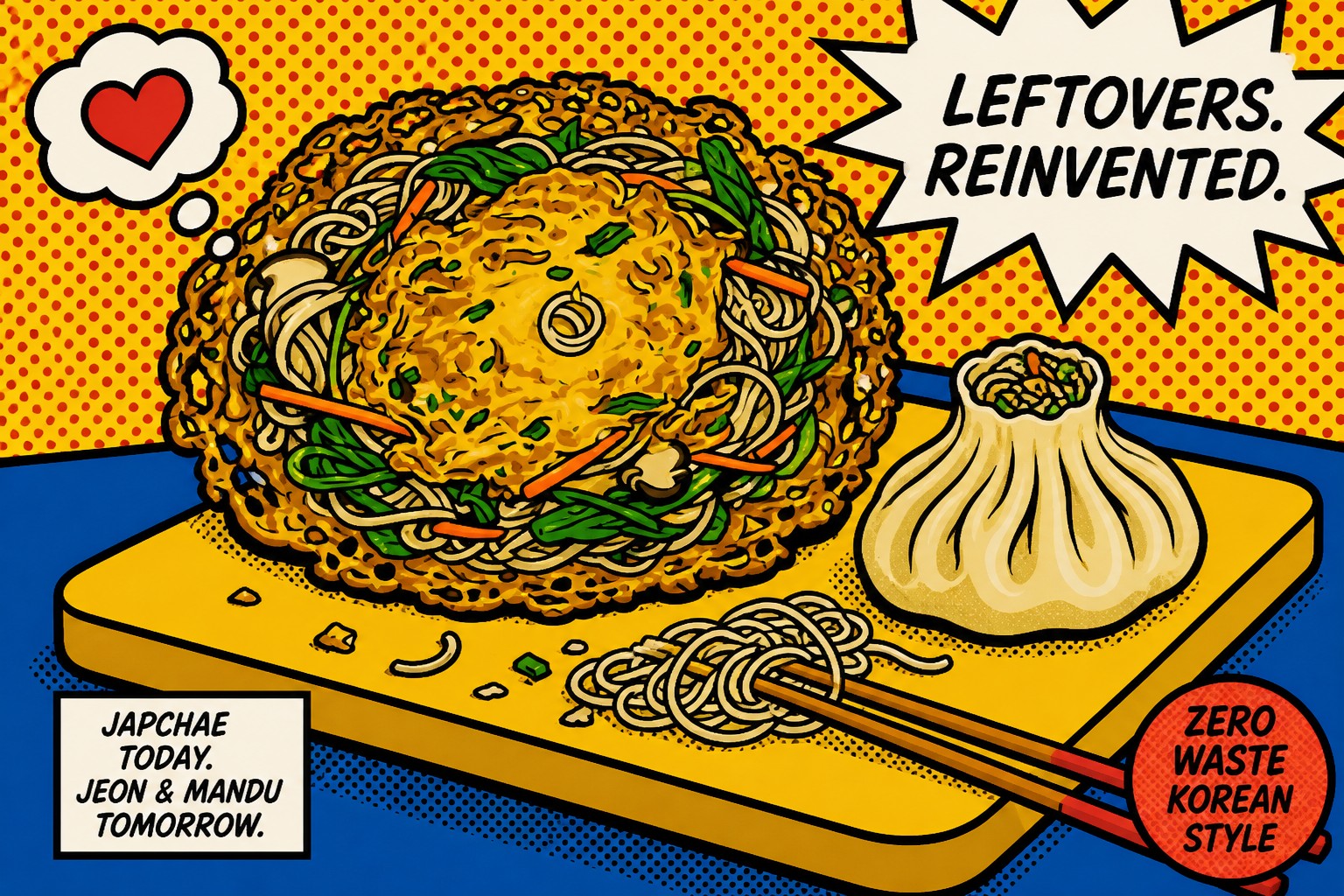
Already seasoned noodles are tomorrow's jeon and mandu — two waste-free transforms that taste intentional, not leftover.
TL;DR
Already seasoned noodles are tomorrow's jeon and mandu — two waste-free transforms that taste intentional, not leftover.
Cold japchae rarely reheats as japchae a second time. Chop leftover noodles into 2 cm lengths, mix with 1 egg, 2 Tbsp flour, and a spoon of kimchi or sliced scallion, then pan-fry as japchae-jeon. The starch from the noodles binds the pancake so you need less batter than a typical kimchi jeon.
As mandu filling, japchae solves a classic problem: wet fillings burst dumplings. Noodles, already oiled and seasoned, stay separate and create air pockets so the filling does not compact into a brick. Mix 200g chopped japchae with 150g ground pork or tofu, press out moisture, and fill mandu wrappers deliberately small.
Both transforms accept freezer life that fresh japchae does not. Freeze jeon between parchment for weekday banchan, or freeze assembled mandu on a tray before bagging. Reheat jeon from frozen in a dry pan 3 minutes per side; steam mandu directly from frozen 8–10 minutes.
Season once, use twice. Because japchae is already salty-sweet-sesame, your jeon batter and mandu mix need 30–40% less seasoning than scratch builds — taste before adding more soy or salt. The restraint keeps leftovers from tasting aggressively salty after concentration in the freezer.
Waste-free is a Korean kitchen value, not a trend. Turning holiday japchae into weekday mandu mirrors how namul and jeon leftovers traditionally became bibimbap the next morning — a lineage of thrift that also happens to be delicious.
More Korean food
Relevant pages on the two hub sites — recipes and a BBQ directory on bulgogi.ai, street rice cakes on tteokbokki.ai.
- bulgogi.ai — recipes & BBQ directory →Marinades, cuts, and a USA Korean BBQ map.
- tteokbokki.ai — street rice cakes →School-cart sauce, rose, mala, and tteok types.
- Bulgogi and galbi recipes →Holiday tables pair japchae with grilled beef, not more noodles.