RECIPES · 2026-08-12
Protein Variations: Beef, Pork, Tofu, and Shrimp Japchae
By Japchae Curator
Beyond bulgogi-style beef — plant and seafood spins that keep japchae's balance without dragging noodles down.
TL;DR
Beyond bulgogi-style beef — plant and seafood spins that keep japchae's balance without dragging noodles down.
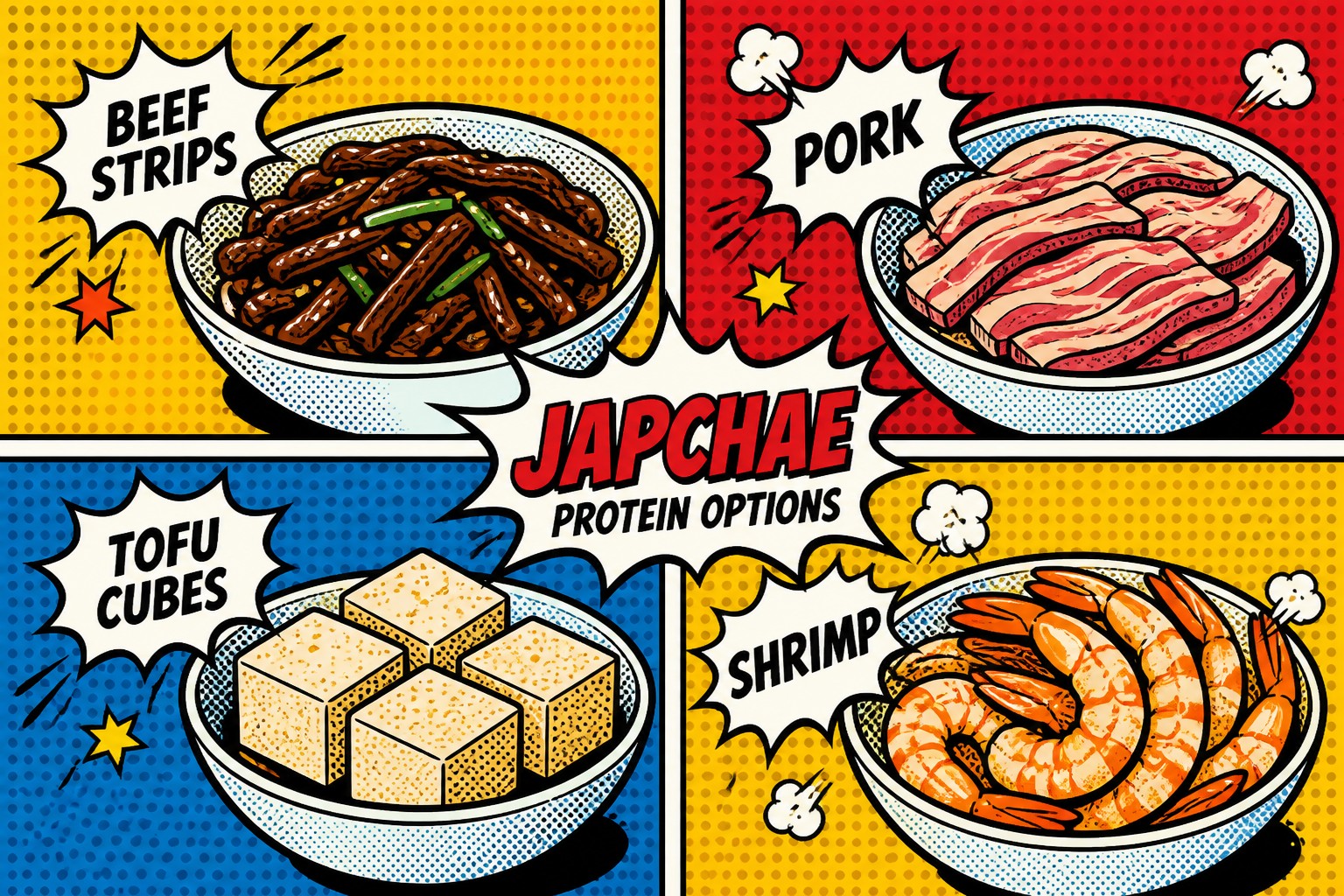
Classic beef japchae uses top sirloin or ribeye sliced thin against the grain and marinated 15 minutes in 1 Tbsp soy, 1 tsp sugar, 1 tsp sesame oil, and pepper — not long enough to cure, just enough to season. Sear hard, pull early, and toss at the end so meat stays tender and does not weep into the noodles.
Pork runs sweeter and benefits from a touch of garlic and a thinner cut; use shoulder sliced 2 mm, sear until edges brown, and balance with extra shiitake. Pork japchae pairs naturally with kimchi on the table because the sweeter meat welcomes acidity nearby.
Tofu and mushrooms make vegan japchae that is not a compromise if you press and sear properly. Press firm tofu 20 minutes, cube 1 cm, pan-fry until golden before adding; double the shiitake and add king oyster shredded into ribbons that mimic meat fibers. Boost soy by half a tablespoon to compensate for absent beef juices.
Shrimp is the festive wildcard: 200g peeled shrimp, patted brutally dry, seared 90 seconds per side, then tossed with noodles off-heat so residual warmth finishes them. Shrimp japchae wants a little less sesame oil and a squeeze of lemon at the table to keep the seafood bright rather than nutty-heavy.
Make it a template. Pick one protein, keep total protein to 200–250g per 200g dry noodles, and keep the vegetable-to-noodle ratio slightly vegetable-heavy; the dish is about the tangle, not a meat pile hiding underneath.
More Korean food
Relevant pages on the two hub sites — recipes and a BBQ directory on bulgogi.ai, street rice cakes on tteokbokki.ai.
- bulgogi.ai — recipes & BBQ directory →Marinades, cuts, and a USA Korean BBQ map.
- tteokbokki.ai — street rice cakes →School-cart sauce, rose, mala, and tteok types.
- Bulgogi and galbi recipes →Holiday tables pair japchae with grilled beef, not more noodles.