SCIENCE · 2026-08-10
Sauce Balance: Soy, Sesame, Sugar, and Heat
By Japchae Curator
The invisible math that makes japchae taste clean not cloying — soy for salt, sugar for gloss, sesame for aroma.
TL;DR
The invisible math that makes japchae taste clean not cloying — soy for salt, sugar for gloss, sesame for aroma.
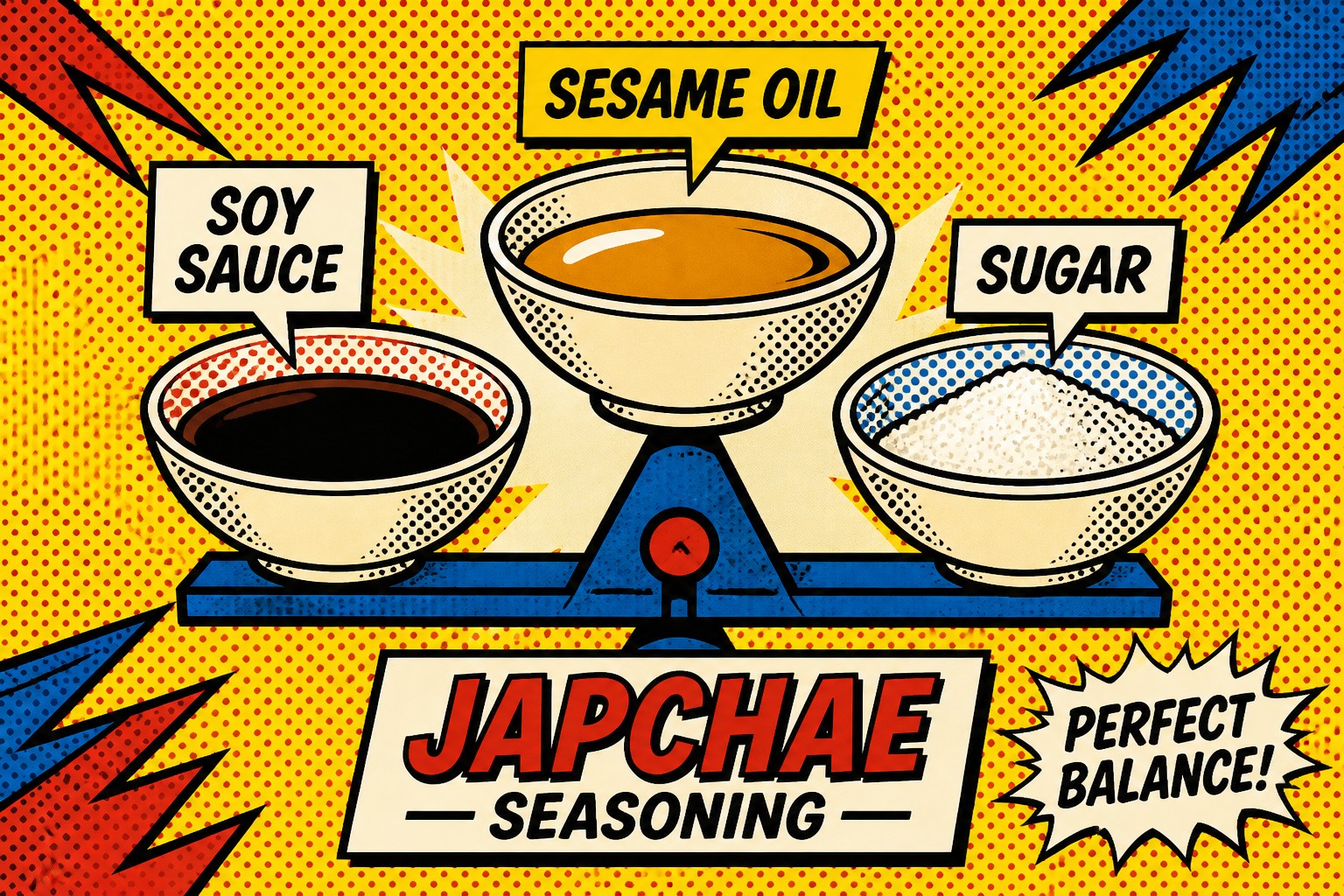
Japchae seasoning is a ratio, not a pour. Start from 4 Tbsp soy sauce, 1.5 Tbsp sugar (or 2 Tbsp plum syrup / oligodang), 1 Tbsp sesame oil, and 1 tsp garlic for 200g dry noodles, then adjust with a half tablespoon at a time; the dish should taste soy-first, sweet-second, and sesame-last.
Sugar choice moves texture. White sugar gives clean sweetness; brown sugar adds molasses depth but can darken noodles; Korean plum extract (maesil-cheong) adds tart brightness and sheen without graininess. If using honey, add off-heat so it does not scorch and seize.
Garlic is measured in pinches here, not spoonfuls. Raw garlic sharpness overwhelms the delicate noodle aroma; a brief 15-second sauté of minced garlic in oil before vegetables is enough, and many Chuseok cooks omit fresh garlic entirely and rely on pepper and sesame.
Heat management is seasoning. High-heat vegetable sears keep water from pooling and diluting soy; wet vegetables make you add more soy to compensate, which then oversalts. Dry your spinach after blanching, sweat mushrooms until they release then reabsorb, and let carrots keep their crisp.
Finish with vinegar only if needed. A few drops of rice vinegar or a side of pickled jangajji cuts richness for modern palates, but classic japchae avoids sour — taste without it first and let sesame and green onion do the lifting.
More Korean food
Relevant pages on the two hub sites — recipes and a BBQ directory on bulgogi.ai, street rice cakes on tteokbokki.ai.
- bulgogi.ai — recipes & BBQ directory →Marinades, cuts, and a USA Korean BBQ map.
- tteokbokki.ai — street rice cakes →School-cart sauce, rose, mala, and tteok types.
- Bulgogi and galbi recipes →Holiday tables pair japchae with grilled beef, not more noodles.