TECHNIQUE · 2026-08-11
Vegetable Prep: The Knife Work That Makes Japchae Sing
By Japchae Curator
Julienne carrots, wilted spinach, shiitake ribbons — how thickness and cut determine whether japchae eats crisp or soggy.
TL;DR
Julienne carrots, wilted spinach, shiitake ribbons — how thickness and cut determine whether japchae eats crisp or soggy.
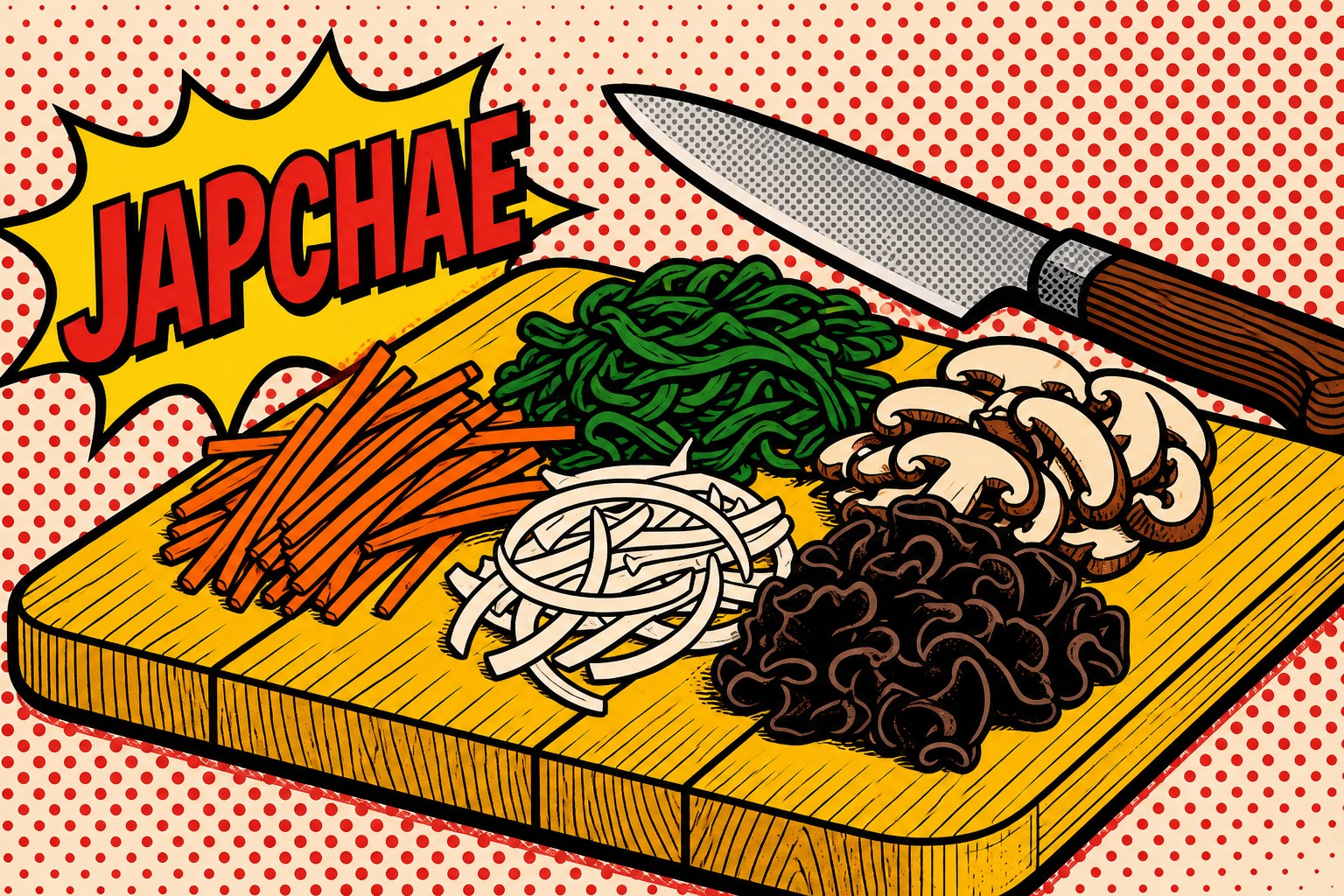
Equal thickness is the goal, not thinness alone. Cut carrots, bell peppers, and onions into 4–5 cm matchsticks about 2 mm thick so they finish in the same 90-second window and distribute evenly among noodles instead of clumping.
Spinach needs squeezing, not just blanching. Boil 30 seconds, shock in ice water, then wring in a towel until almost dry before seasoning with a pinch of salt and sesame oil. Wet spinach waters the entire pan and turns japchae gray; dry spinach stays emerald and seasons precisely.
Mushrooms want separate treatment. Shiitake sliced 3 mm thick gets a quick soy-sugar sear until edges brown and reabsorb their juice; wood ear soaked and sliced mirrors the noodle translucency and adds a cartilage chew that teaches textural contrast. Do not steam them together.
Onion benefits from late entry. Add sliced onion last among vegetables so it keeps a little crisp and sweetness rather than dissolving into jam; yellow and red onion both work but red holds color better for a festive plate if you manage heat.
Garnish is not afterthought. Julienne the white part of scallion, pan-toast sesame seeds 90 seconds until fragrant, and optionally ribbon a thin jidan (egg garnish) across the top. Those finishing textures are how a home plate reaches Korean restaurant gloss without extra sauce.
More Korean food
Relevant pages on the two hub sites — recipes and a BBQ directory on bulgogi.ai, street rice cakes on tteokbokki.ai.
- bulgogi.ai — recipes & BBQ directory →Marinades, cuts, and a USA Korean BBQ map.
- tteokbokki.ai — street rice cakes →School-cart sauce, rose, mala, and tteok types.
- Bulgogi and galbi recipes →Holiday tables pair japchae with grilled beef, not more noodles.